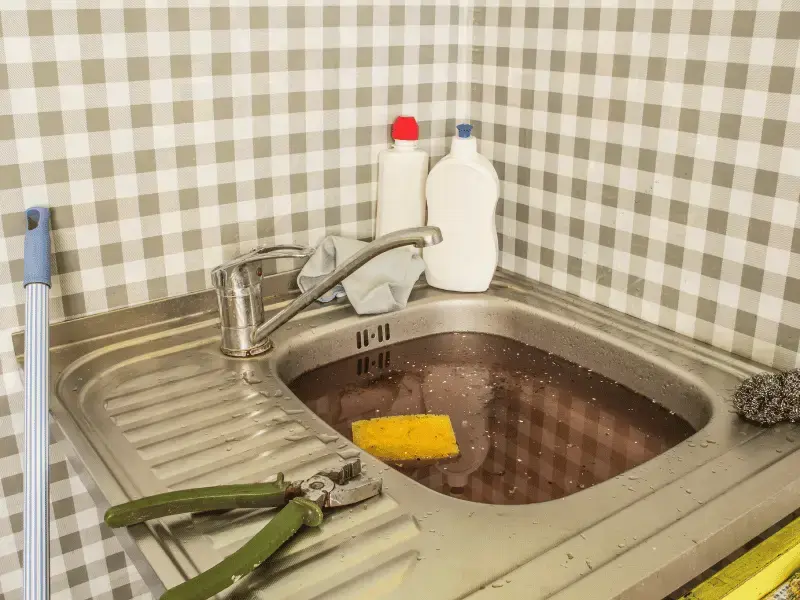





Quick Answer: A drain clogged with grease happens when fats, oils, and grease (FOG) from cooking enter the kitchen sink, cool inside kitchen pipes, and stick to the pipe walls. This sticky coating traps food particles, debris, and soap residue from detergents, gradually narrowing the pipe and creating restricted flow. Over time, the buildup thickens into a grease blockage that causes slow drains, foul odors, and eventually standing water or a complete blockage. If ignored, the clog can move deeper into sewer pipes, creating a sewer backup or even wastewater overflows that damage plumbing systems and homes.
What a Drain Clogged With Grease Really Means
A drain clogged with grease means layers of hardened fats, oils, and grease (FOG) have accumulated along the pipe walls inside the plumbing system. At first, grease may appear harmless because it enters the sink as a liquid.
However, as the grease travels through the plumbing, it reaches cooler pipe sections where cooling and solidification occur. This process causes grease to stick to the inside of the pipe.
Once that sticky layer forms, it begins collecting other materials moving through the drain such as:
- Food particles
- Debris
- Soap residue from detergents
- Small waste from dishwashing
- Particles released from garbage disposal
Each layer thickens the buildup until the pipe becomes narrower. Eventually, the flow of wastewater slows dramatically and leads to a grease blockage.
When this buildup becomes severe, homeowners often require a professional drain cleaning service to fully remove the hardened grease and restore normal drainage.
How Grease Turns Into a Pipe Blockage
Grease clogs do not happen instantly. Instead, they form through repeated exposure to cooking fats over time.
When oils and fats enter the drain, they coat the pipe interior. As the grease cools, it begins to harden and adhere to the pipe.
Common grease sources include:
- Cooking oils
- Grease from meat
- Dairy products
- Frying oil
- Leftover sauces and dressings
These substances form a sticky base layer inside pipes. Once the layer exists, it begins trapping additional food particles and debris, which quickly transforms a thin film into a thick obstruction.
Eventually, the buildup reduces pipe capacity and creates restricted flow that leads to slow drains.
Why Kitchen Pipes Are Especially Vulnerable
Kitchen plumbing handles more organic waste than any other drain in a home.
Unlike bathroom drains, kitchen sinks regularly carry grease from cooking. Even small amounts accumulate when washed down repeatedly.
The following factors make kitchen drains vulnerable:
- Long horizontal pipe runs
- Lower water temperatures farther down the pipe
- Frequent food residue entering the drain
- Use of garbage disposal
Because of these conditions, grease tends to stick and remain inside kitchen lines. Over time, the accumulation develops into a drain clogged with grease that affects normal water flow.
Early Warning Signs of Grease Buildup
Grease clogs usually develop gradually and give off warning signs before becoming severe.
Common symptoms include:
- Slow drains in the kitchen sink
- Persistent foul odors from decomposing food waste
- Gurgling sounds while draining
- Occasional backed-up drains
- Water pooling or standing water in the sink
When these warning signs appear repeatedly, the grease buildup may already be thick enough to require mechanical cleaning.
Why Grease Clogs Become Serious Plumbing Problems
A small grease layer may seem harmless at first, but the buildup grows rapidly with continued use of the sink.
Once the pipe narrows enough, water pressure increases inside the system. This can eventually cause:
- Sink overflow
- Kitchen water flooding
- Sewer backup into household fixtures
- Damage to cabinets or flooring
In more severe cases, grease may move deeper into the sewer pipes, contributing to wastewater overflows that affect larger municipal sewer systems.
These issues can create both plumbing damage and environmental concerns.
Does Coconut Oil Block Drains?
Yes, many homeowners ask does coconut oil block drains, and the answer is yes.
Coconut oil behaves differently from other cooking oils because it solidifies quickly at room temperature.
When coconut oil enters a drain, it cools and hardens rapidly. This makes it more likely to attach to the pipe interior and trap other debris.
Over time, repeated exposure can contribute to a kitchen sink grease clog.
What Breaks Down Grease in Pipes
Some materials can help break down grease deposits before they harden into severe blockages.
Grease Breakdown Solutions
- Hot water combined with dish soap
- Baking soda followed by white vinegar
- Biological enzyme cleaners
- Mechanical cleaning with a drain snake
- Professional hydro-jetting
These methods work best during early buildup stages. Once grease fully coats the pipe walls, stronger solutions may be required.
In more complicated cases, certified sewer camera inspection technicians inspect the interior pipe condition before selecting the best cleaning method.
How to Unclog a Kitchen Sink With Grease
When grease buildup causes slow drainage, homeowners often attempt simple DIY fixes before calling a plumber.
DIY Grease Unclogging Steps
- Pour hot water mixed with dish soap into the drain.
- Add baking soda followed by vinegar.
- Allow the mixture to sit for 15 minutes.
- Use a plunger to break the clog.
- Insert a drain snake to remove deeper buildup.
- Flush the line with hot water again.
These methods can sometimes resolve minor clogs, but deeper buildup may remain inside the pipe.
If symptoms return quickly, the clog may require professional cleaning.
Common Causes of Grease Clogs
Cause | Source Example | Plumbing Impact |
Cooking oils | Olive oil, vegetable oil | Sticky film on pipe walls |
Meat grease | Bacon fat, beef drippings | Thick buildup formation |
Dairy products | Butter, cheese, cream | Combines with debris |
Food scraps | Pasta, crumbs, rice | Trapped inside grease |
Soap residue | Dishwashing detergents | Creates waxy deposits |
Repeated exposure to these substances leads to a drain clogged with grease.
Why Grease Combines With Other Materials
Grease alone can cause problems, but the issue becomes worse when it combines with other materials.
Grease interacts with:
- Food particles
- Debris
- Soap residue
- Coffee grounds
- Small scraps from plates
The sticky grease traps these materials, creating a dense clog that becomes harder to remove.
At this stage, many homeowners notice their sink stopped up with grease and draining extremely slowly.
Why Soap Residue Can Make Kitchen Grease Clogs Worse
In some kitchens, a soap scum in drain layer can combine with grease and make the blockage denser. Dishwashing detergents, food residue, and grease do not always stay separate once they enter the plumbing. Over time, soap-based residue can leave a sticky film that helps oils and debris cling more firmly to the inside of the pipe. This makes the buildup harder to rinse away and increases the chance that a minor grease problem will turn into a recurring drain restriction.
Warning Signs and Their Meaning
Warning Sign | Likely Cause | Risk Level |
Slow drainage | Early grease buildup | Medium |
Bad smells | Food decomposition | Medium |
Gurgling sounds | Air trapped behind clog | Medium |
Standing water | Severe blockage | High |
Multiple drain backups | Sewer line issue | High |
These symptoms indicate the pipe may already be partially blocked.
Preventing Grease From Clogging Kitchen Pipes
Preventing grease buildup is much easier than removing it later.
Helpful habits include:
- Wiping pans with paper towels
- Pouring leftover oil into containers for trash
- Installing sink strainers
- Limiting use of garbage disposal
- Flushing pipes with warm water after dishwashing
These habits significantly reduce the chances of a drain clogged with grease.
Many plumbers also recommend following tips to avoid olive oil drain blockage by collecting oil separately instead of rinsing it into the sink.
External Pipe Damage Can Make Grease Problems Worse
Sometimes grease buildup is only part of the problem.
External plumbing issues may contribute to repeated clogs. For example, tree roots can damage sewer pipes, creating rough surfaces where grease and debris accumulate faster.
Once grease attaches to these damaged areas, the blockage grows more quickly and can affect the entire drainage system.
If recurring clogs occur, inspection of the full drainage line may be necessary.
What to Do If You Accidentally Poured Grease Down Drain
Many homeowners panic when they realize they accidentally poured grease down drain, but acting quickly can reduce the risk of blockage.
Quick fixes include:
- Flushing the drain with hot water and soap
- Avoiding additional grease disposal
- Monitoring for slow drainage
If symptoms appear within a few days, grease may have already hardened deeper in the pipe.
At that stage, professional assistance may be required.
Why Professional Drain Cleaning Is Sometimes Necessary
DIY methods cannot always remove grease fully because buildup often sticks tightly to pipe walls.
Professional plumbers use advanced tools such as:
- Hydro-jetting equipment
- Motorized augers
- Pipe inspection cameras
These tools remove grease from the entire pipe diameter rather than simply punching a hole through the clog.
If grease buildup keeps returning, contacting a local plumbing company can help identify deeper plumbing issues.
Stop Grease Clogs Before They Damage Your Plumbing
A drain clogged with grease can quickly escalate from a minor inconvenience to a major plumbing emergency affecting your entire drainage system.
American Home Repair Services provides professional inspections, drain cleaning, and long-term solutions to eliminate grease buildup and restore normal water flow.
📞 Call American Home Repair Services at 8187657240 today to schedule professional service and prevent grease clogs from damaging your plumbing system.
FAQs About Drain Clogged With Grease
Why does a drain clogged with grease happen in kitchen sinks?
Because fats, oils, and grease cool inside pipes and stick to the pipe walls, trapping debris and restricting water flow.
Can grease clogs damage plumbing systems?
Yes. Severe grease buildup can cause sewer backups, flooding, and wastewater overflows that damage plumbing systems.
Are chemical cleaners safe for grease clogs?
Many chemical cleaners damage pipes or push grease deeper into the system instead of removing it.
Can grease clogs affect the environment?
Yes. Sewer overflows caused by grease blockages can pollute rivers and waterways.
When should a plumber be called?
If slow drainage, odors, or standing water occur repeatedly, professional inspection is recommended.