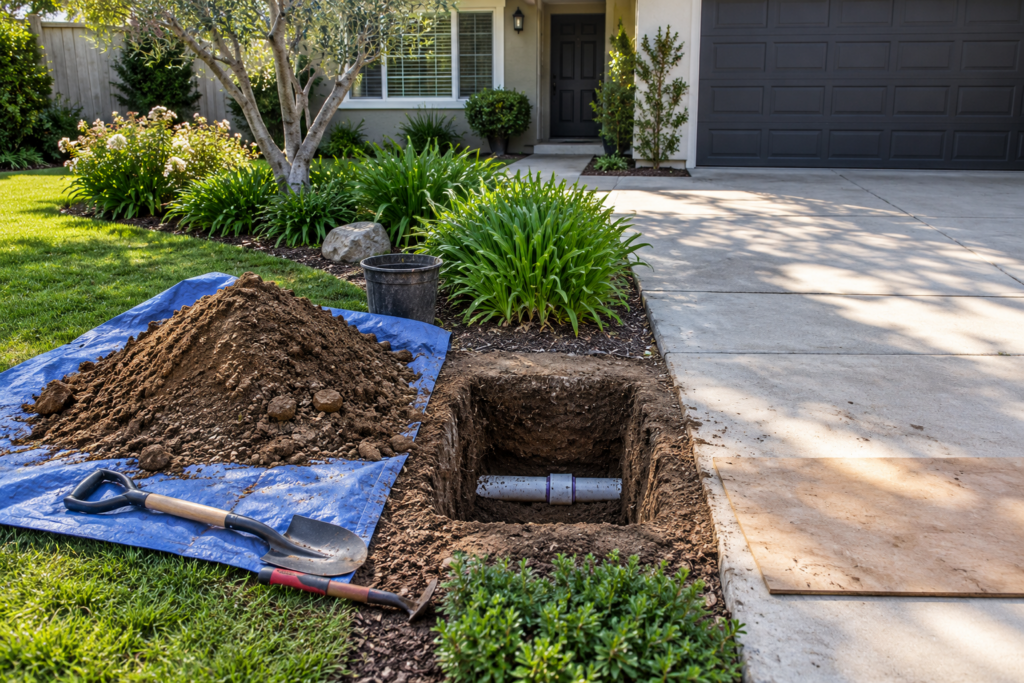





Trenchless sewer repair does not automatically include restoring every disturbed part of your yard or driveway. The written proposal determines whether access excavation, backfill, concrete patching, landscaping, irrigation work, and cleanup are included or assigned separately.
For an Encino homeowner comparing repair options, the useful question is what the property will look like and how it will function when the agreed work is complete. Less digging can still leave an access area that needs finishing.
Less Excavation Still Requires an Access Plan
Trenchless methods work through selected access points instead of opening a continuous trench along the entire pipe. Existing cleanouts may provide some access, while other projects require excavation.
The location and size of the openings depend on the pipe route, depth, condition, connections, equipment, and method selected. Ask the contractor to identify the proposed access areas at your home.
A description such as “minimal digging” is not a restoration specification. Request an explanation of which surfaces will be disturbed and how each will be left afterward.
Lining and Pipe Bursting Can Affect Different Areas
Trenchless pipe lining rehabilitates a suitable existing line. Its access needs depend on how the pipe can be prepared, the liner installed, and connections verified.
Pipe bursting replaces pipe along an existing route. Entry and receiving access, connections, and equipment space can create different surface-work requirements.
The best method must address the actual pipe problem. Surface preservation matters, but it cannot make an unsuitable method correct a collapsed, badly aligned, or otherwise incompatible line.
Distinguish Backfill From Finished Restoration
Backfill returns suitable material to an excavation. Finished restoration addresses the lawn, paving, concrete, planting, or other surface above it. The two tasks are not interchangeable.
Ask whether the proposal includes the specified backfill and compaction work, final grading, and the finished surface. Confirm the responsibilities even where the access opening appears small.
If a separate trade will finish the surface, agree on who coordinates the handoff and when the area can be used. Do not assume a pipe crew’s departure means every finish item is complete.
Confirm the Condition Promised for Each Surface
Walk the affected areas with the contractor before approval. Photos can help document the starting condition without attributing existing cracks or damage to the new work.
- Lawn: soil finish and whether sod or seed is included.
- Concrete: patch boundaries, finish, and responsibility.
- Pavers: removal, storage, bedding, and resetting.
- Planting beds: plants, mulch, and final grading.
- Irrigation: disturbed lines, reconnection, and testing.
- Access covers: final height and accessibility.
- Cleanup: soil, debris, and disposal responsibilities.
New material may not match weathered concrete, older pavers, or established planting exactly. Ask about the expected finish instead of relying on the phrase “restore the yard.”
Equipment Access Can Extend Beyond the Excavation
The access pit is only one part of the work area. Equipment, removed soil, materials, and a safe route to the line can require additional space.
Discuss protection for nearby paving, plants, gates, and walls. Tell the contractor about irrigation controls, landscape lighting, or other features that may not be obvious.
Ask what you should move before the appointment and which areas need to remain clear. Keeping the agreed route available can avoid last-minute changes to the access plan.
Compare Complete Project Scopes, Not Pipe Prices Alone
Two sewer proposals can use the same repair method yet include different finishing responsibilities. That can account for part of a price difference without establishing which proposal is better.
Compare these items side by side:
- The inspected section and repair endpoints.
- The proposed method and its access requirements.
- Preparation, cleaning, and locating included.
- Connections and branch work included.
- Backfill and grading responsibilities.
- Specific surface-restoration items.
- Testing and required inspection coordination.
- Exclusions and additional-work approval.
A proposal that excludes paving or landscaping is not automatically a poor choice. It should make the exclusion clear so you can plan the complete project and compare the same final outcome.
Define What Happens If Access Requirements Change
Underground conditions can become clearer during preparation or excavation. A concealed connection, utility conflict, or different pipe route may alter the original access plan.
Before work starts, ask how revised access or restoration needs will be explained and priced. Useful questions include:
- Which assumptions about the pipe and access remain unverified?
- What finding could require an additional opening?
- Who will explain a change before it is performed?
- How will the revised surface work be documented?
- Will excluded restoration need a separate contractor?
- How will you approve any additional work?
Keep changes in writing. An agreed process is more useful than a broad promise that no unexpected work will ever be necessary.
Plan Household Use and the Restoration Sequence
Ask when the sewer will be out of service and when plumbing use may resume. Pipe testing and reconnection are separate milestones from finishing the yard.
Some surface work may follow completion of the pipe repair. Confirm which areas must remain protected or off limits and who will explain when they can be used.
For a driveway, ask about vehicle access during each stage. For a walkway, arrange a safe alternative route for household members and visitors.
Do not assume the advertised repair duration includes every finish trade or material-curing period. Request the expected sequence for the entire agreed scope.
Review the Final Pipe Work and Property Condition
At completion, compare the work with the written proposal. Ask for the agreed testing or inspection information, and review any retained pipe limitations that still matter.
Walk the disturbed areas and identify any outstanding finish items, who owns them, and their planned completion. Keep the proposal, approved changes, and final records together.
Discuss Trenchless Repair and Restoration in Encino
Trenchless repair can reduce surface disruption where the line and access are suitable. Clear restoration boundaries let you choose with a realistic picture of the complete work.
American Plumbing And Water Damage Restoration offers sewer repair, lining, and pipe bursting in Encino. Call (818) 765-7240 to discuss your line’s condition, repair options, and the access and restoration scope for your property.