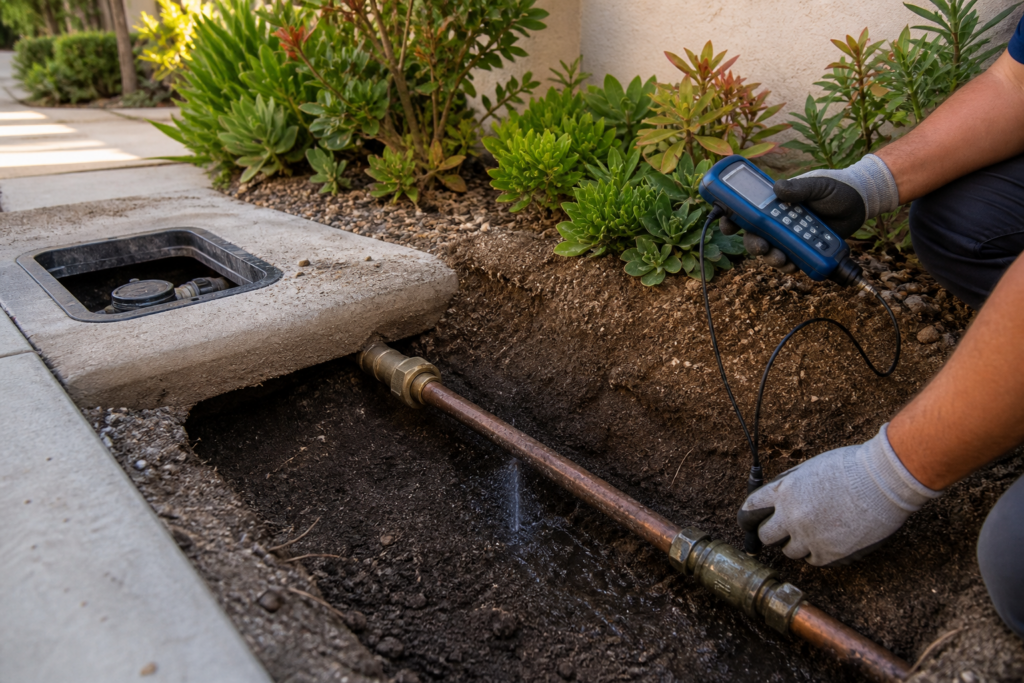





Yes. A smaller leak in the buried water service between the meter and your home can release water while faucets and showers still seem to have normal pressure. The supply may continue delivering enough water for ordinary use, especially when you check only one fixture at a time. Pressure that feels normal is reassuring, but it does not prove that the service line is watertight.
Look for evidence that agrees across more than one source: unexplained meter movement after intended water uses are accounted for, a water-bill change, damp ground along the service route, the sound of water when the home is quiet, or a pressure change that appears only when several fixtures run. None of those clues identifies the leak by itself. A plumber can isolate the buried service from fixtures, irrigation, and interior piping before recommending repair.
Pressure and Water Volume Are Not the Same Thing
Water pressure is the force available at a point in the plumbing system. Flow is the amount of water delivered while a fixture is running. A system can show adequate pressure during a low-demand moment while losing some water through a leak elsewhere.
Opening one faucet may not demand enough flow to expose the loss. A showerhead or faucet aerator can also make a modest change hard to notice. If a pressure regulator controls the water entering the house, downstream pressure may appear steady even though another observation suggests water is escaping along the service route.
Normal pressure alone neither proves nor rules out a buried leak. Consider it alongside the meter, usage, ground conditions, and measured performance.
Why a Smaller Leak May Not Change What You Feel Indoors
A buried service line normally remains under pressure so water is available when a fixture opens. A small opening may release water continuously, yet the incoming supply may still meet the demand of a sink, toilet refill, or ordinary shower. The loss can show up first in the meter or bill rather than at the faucet.
The change may become more noticeable only during higher demand. A shower might feel normal by itself, but flow could weaken when laundry, irrigation, or another fixture runs at the same time. That pattern is useful to report, but it can also result from a regulator, partially closed valve, corroded piping, municipal supply condition, or another restriction. It does not prove a leak.
Signs That Matter Even When Pressure Seems Fine
Normal-feeling pressure deserves a second look when another condition suggests water is going somewhere it should not. Useful clues include:
- A water bill rises without a matching change in household use.
- A safely visible meter continues registering flow after intended water uses are accounted for.
- Soil stays damp or unusually soft along the likely route from the meter toward the house.
- One narrow strip of landscaping grows differently even though irrigation coverage has not changed.
- Water appears at a curb, meter box, driveway edge, foundation area, or low spot during otherwise dry conditions.
- A faint water-running or hissing sound remains when fixtures are quiet.
- Pressure or flow changes only when several fixtures operate together.
- Soil washes away, settles, or develops a depression near the suspected service route.
Irrigation, a running toilet, an automatic device, drainage, groundwater, or another pipe can create similar clues. Record the pattern rather than assigning the source.
How to Observe the Water Meter Safely
Use the meter only as an observation point when it is safely visible and accessible. Do not enter traffic, standing water, unstable ground, or an insect- or animal-filled box. Do not operate a utility-owned valve, disconnect anything, or force a damaged cover.
Before looking for unexplained movement, confirm that faucets and showers are off and no one is using water. Account for refilling toilets, ice makers, appliances, irrigation, pool equipment, and water-treatment systems that may operate automatically.
If conditions are safe, note or photograph the displayed reading or movement without touching the equipment. Record the time and which water-using systems were inactive. A later observation can show whether the meter registered additional use during a controlled quiet period.
Do not choose a universal wait time or interpret one small movement as a main-line diagnosis. Meter designs differ, automatic devices can cycle, and a leak anywhere downstream of the meter may register. Share the observations with the plumber so the service line can be isolated from other possible sources.
What Meter Movement Can and Cannot Tell You
Meter movement with intended uses off suggests water may still be passing through the metered system. It does not show whether the water is escaping from the buried service, an irrigation branch, a toilet, an appliance connection, an interior supply line, or another downstream component.
No visible movement during one short check proves the line is sound. A small loss may not produce an obvious display change, and observed moisture may have another source. Billing history and professional measurements provide context.
Avoid repeatedly opening and closing unfamiliar shutoffs to locate the loss. Older valves can fail when disturbed, and the utility side of a meter may not be homeowner-operated. A plumber can identify the appropriate isolation points and use them in a controlled sequence.
Compare Normal Use With Higher Demand
Without installing a gauge or altering the plumbing, note how the home behaves during normal routines. Does one fixture seem normal while two fixtures running together produce an obvious change? Did that pattern begin recently, or has it always been present? Does the pressure recover immediately when the second use stops?
These details help distinguish static pressure from available flow under demand. They still do not identify the cause. For a focused explanation of actual fixture or whole-home pressure loss, review the existing low-water-pressure information for Encino homes.
Do not run multiple fixtures for an extended test when a leak is suspected. Adding water use can increase waste and may worsen an active ground or structural condition.
Check the Ground Without Digging
From a safe surface, look along the likely route between the meter and the point where the service enters the home. The exact route may not be straight or visible, so treat this as documentation rather than leak locating.
Note damp soil, pooling, erosion, depressions, or water at pavement joints. Compare the area with irrigation timing and recent rain, and photograph changes from a safe location.
Do not probe the soil, drive a rod into the ground, pull up a pipe, or begin excavation. Buried electrical, gas, communication, irrigation, sewer, and water utilities may share the area. Digging can turn a small loss into a larger break and create a separate safety hazard.
When the Situation Needs Prompt Help
Arrange prompt inspection when the meter, bill, sound, and ground pattern suggest ongoing loss even though indoor pressure remains usable. Faster action is warranted when water is spreading toward the foundation, entering a crawlspace or lower level, undermining pavement, or creating a growing soft spot.
Stay away from water near electrical equipment, damaged pavement, active excavation, or unstable soil. A visible spray, rapidly enlarging wet area, sudden major flow loss, or ground collapse should not be approached. If a familiar homeowner-operated shutoff is safely accessible, follow the property’s established emergency procedure. Do not operate the utility valve at the street or enter an unsafe meter area.
What a Plumber Verifies Before Recommending Repair
A condition-led inspection begins by confirming which water uses are active and whether the meter observation can be reproduced. The plumber can then separate the buried service from irrigation, fixtures, appliances, and interior supply lines using appropriate isolation points.
Depending on access and the property, the evaluation may include:
- Comparing pressure and delivered flow at selected points and under controlled demand.
- Checking whether a pressure regulator, shutoff, or interior restriction explains the reported change.
- Confirming the likely route and material of the meter-to-house service.
- Inspecting the meter box, visible connections, entry point, and ground for leakage evidence.
- Using suitable listening, tracing, or other non-invasive locating methods before excavation.
- Determining whether the loss is on the service line, an irrigation branch, or interior plumbing.
The purpose of isolation is to avoid repairing the wrong system. A damp yard with normal pressure could involve irrigation or drainage. A moving meter could involve an interior fixture. Evidence should agree before the buried service is opened.
A Confirmed Leak Does Not Automatically Mean Full Replacement
One localized defect in an otherwise serviceable line may support a targeted repair. Repeated failures, widespread corrosion, an unsuitable or deteriorated material, difficult access, or damage along a longer section may change that recommendation.
The decision should follow the verified location, line condition, material, repair history, route, and access—not the pressure sensation alone. American Home Repair Services provides water-line repair and replacement in Encino based on the condition found.
Ask which evidence confirmed the leak, which segment is affected, whether the rest of the service was evaluated, and why repair or replacement fits that condition.
Frequently Asked Questions
Can a small main-water-line leak raise my bill without lowering pressure?
Yes. A smaller continuous loss may add usage while the supply still meets ordinary fixture demand. Confirm the bill period, household changes, irrigation, and automatic equipment before attributing the increase to the service line.
Does a moving meter prove the buried main line is leaking?
No. It indicates metered water may still be flowing, but the source could be a fixture, appliance, irrigation branch, interior pipe, or buried service. Isolation is needed to locate it.
Can good shower pressure rule out an underground leak?
No. One shower can feel normal when supply capacity remains adequate. Note whether flow changes under greater demand and whether meter, billing, sound, or ground evidence points to ongoing loss.
Should I dig where the yard is wet?
No. The wet area may not be directly above the leak, and other utilities may be present. Document the condition and let qualified professionals locate the source and plan safe access.
Request a Main-Water-Line Inspection in Encino
If your water pressure seems normal but the meter, bill, ground, or sound suggests a hidden loss, do not wait for a major pressure drop to seek a diagnosis. Record what you observed, which water uses were off, when the condition appeared, and whether it is changing.
Contact American Home Repair Services to request a water-line inspection in Encino. The service-line and other downstream uses can be isolated before a repair or replacement recommendation is made.